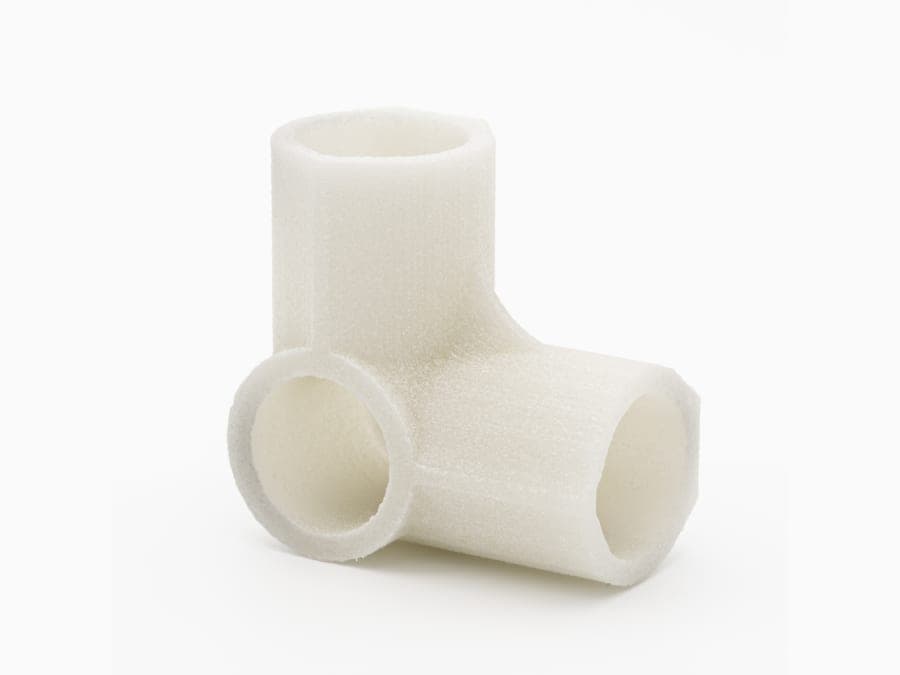
SLS Polypropylene
Engineering Plastics
DurableFunctionalWater resistantChemical resistant
SLS polypropylene (PP) is a lightweight, semi-rigid plastic with excellent chemical resistance, low moisture absorption, and good fatigue resistance. It is comparable to injection-molded PP in strength (about 29 MPa) and density (about 0.9 g/cm³), but stretches far less before breaking (roughly 15–35% depending on powder and direction, lower across the layers, versus 100% or more for molded PP). Parts soften under load at around 60 °C, degrade in prolonged sunlight, and are difficult to paint. SLS polypropylene works well for clips, hinges, and other parts that bend repeatedly, as well as orthotic insoles.
Available finishes
Each finish can be combined with the available colors at checkout.

Standard
2 colorsThe standard finish on SLS polypropylene has a matte, slightly grainy surface, white and slightly translucent, with no support marks.

Electroplated
8 colorsElectroplated SLS polypropylene is coated in a thin layer of real metal for a metallic look and a conductive surface. Polypropylene is hard to plate, so the coating adheres less well than on other plastics and can peel or crack with flexing.