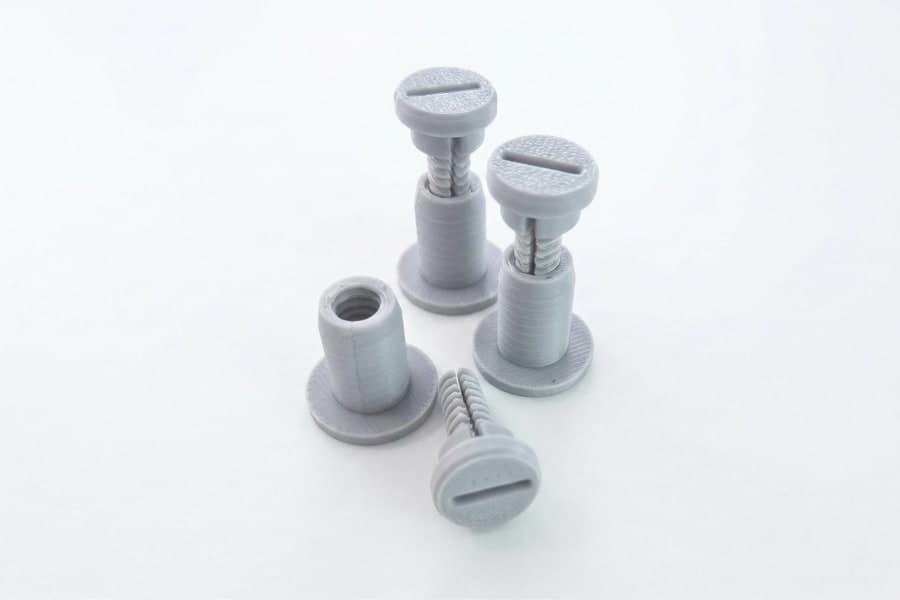
PLA+ (Tough PLA)
Standard Plastics
FunctionalVisualStrongImpact resistant
PLA+ and Tough PLA are umbrella terms for PLA blended with additives that target regular PLA's main weakness: brittleness. Compared to standard PLA, they generally offer noticeably better impact resistance and can flex and absorb energy before breaking, rather than snapping suddenly on impact. This toughness gain usually comes with a slight trade-off in rigidity, and raw tensile strength is often similar to standard PLA rather than genuinely higher. Because "PLA+" and "Tough PLA" aren't standardized specifications, exact performance can vary between manufacturers. Some formulations approach ABS-level impact resistance, but they don't gain ABS or PETG's heat resistance. For parts that need to withstand both impact and elevated temperatures, ABS or PETG remain the better choice. PLA+ and Tough PLA suit functional prototypes, mechanical parts, and tooling that need to withstand occasional impact without shattering.
Available finishes
Each finish can be combined with the available colors at checkout.

Standard
48 colorsThe standard (as-printed) finish on FDM parts shows the natural texture of layer-by-layer printing. The visibility of the layer lines depends on part geometry and orientation, plus light marks where support material was removed.

Sanded
47 colorsThe sanded finish on FDM parts reduces the visibility of layer lines compared to the standard finish, though some surface texture generally remains. How much smoothness is achieved can vary depending on the material.