Elastic Resin
Flexible Plastics
FlexibleDurableFunctionalVisual
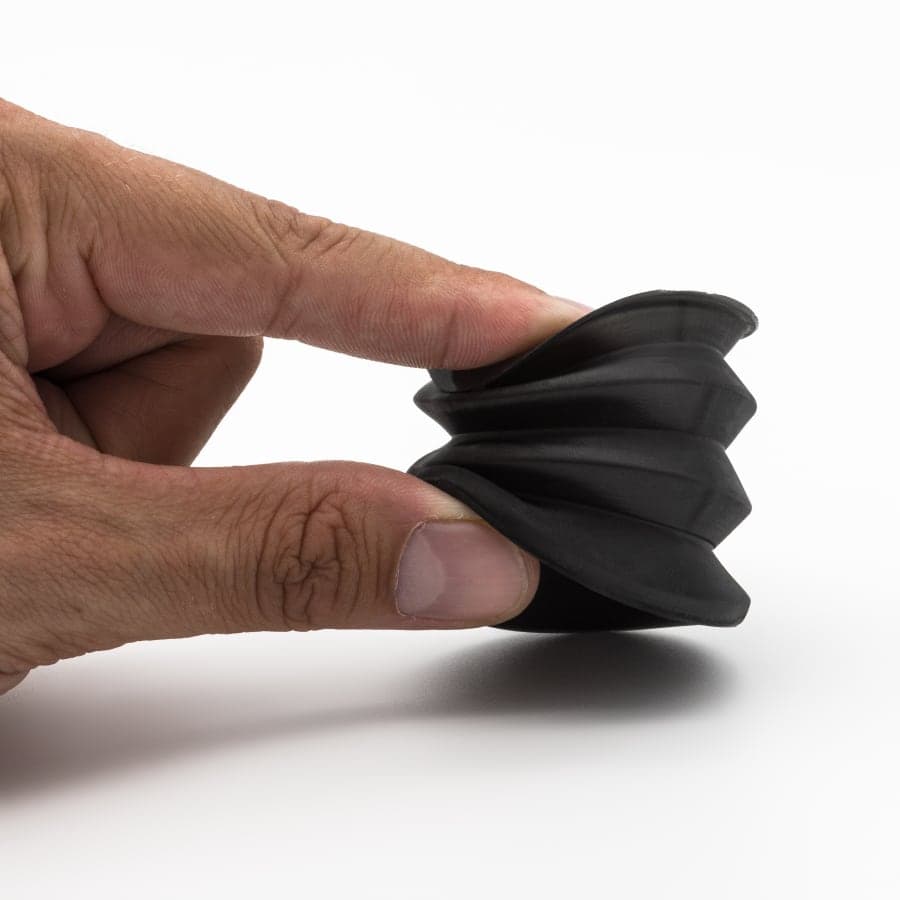
Elastic resin is formulated to be soft and stretchy like silicone rubber, typically ranging from Shore 50A to 65A; it's notably softer than flexible resin's firmer ~80A range. It combines high elongation at break, often well over 100%, with good tear resistance and quick rebound, letting parts compress, stretch, and flex repeatedly without tearing or losing their shape. This sets it apart from flexible resin, which holds some rigidity and a firmer, soft-touch feel rather than true rubber-like softness. Elastic resin suits ergonomic grips and handles, wearable components like straps and bands, compressible buttons, gaskets and seals, and soft-touch prototypes that need to mimic molded silicone or rubber parts.
Available finishes
Each finish can be combined with the available colors at checkout.

Standard (Shore 50A-65A)
8 colorsElastic resin parts have a smooth, matte surface with a distinctly rubber-like, silicone-like feel rather than a rigid plastic texture. Fine layer lines are typically not very noticeable, and marks from support removal can still be visible.